
Your roof just survived a Michigan winter. That does not mean it is ready for what comes next.
Every spring, we climb onto roofs across Michigan and find the same pattern: shingles loosened by freeze-thaw cycles, flashing pulled away by ice dams, decking stressed by months of snow load. The homeowner had no idea. The roof looked fine from the driveway. Then the first May thunderstorm rolls through and that “fine” roof is leaking in three places.
Michigan roofs face a double threat most storm prep guides ignore. Winter weakens your roof. Spring storms exploit those weaknesses. If you prepare for storms without assessing what winter did, you are starting from behind.
This guide covers Michigan’s severe weather risks, how to assess post-winter damage, a section-by-section inspection checklist, and the steps that prevent roof storm damage rather than just react to it.
Michigan’s Severe Weather Season by the Numbers
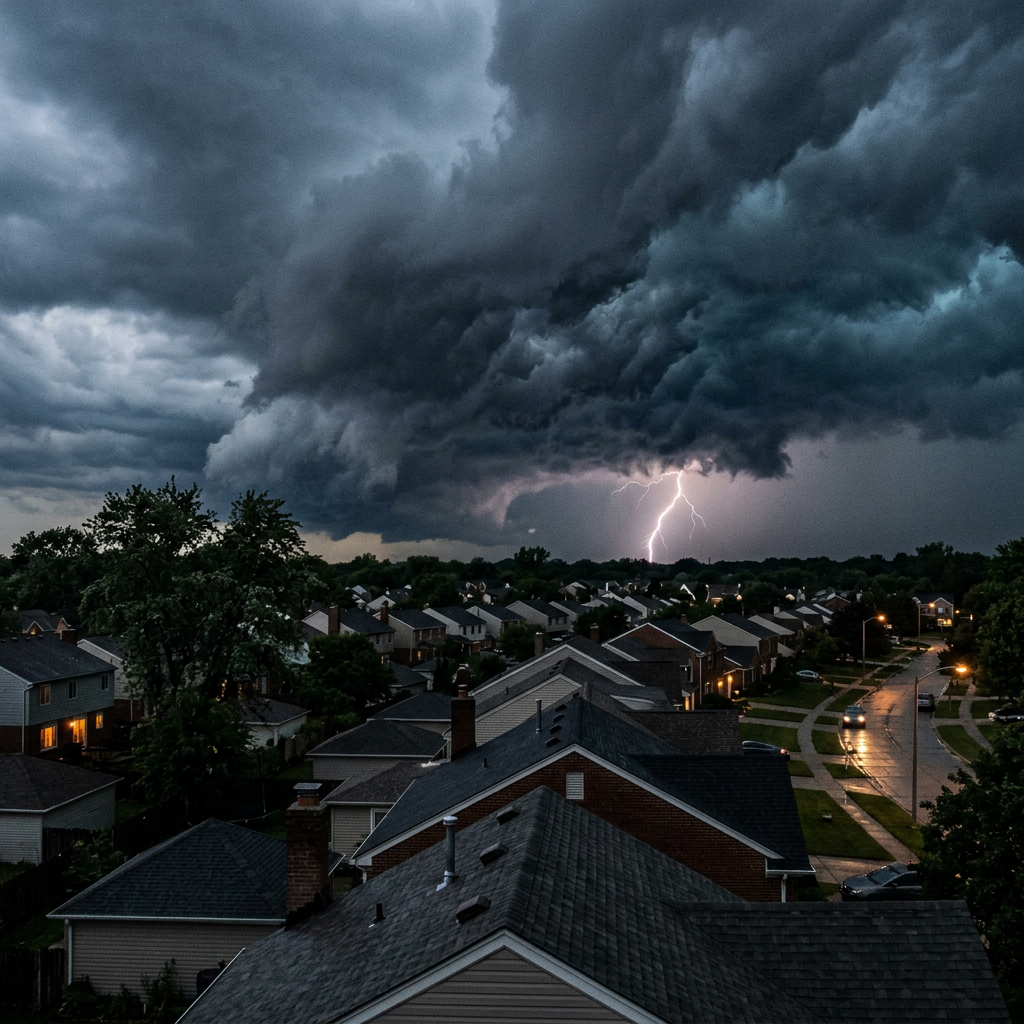
Michigan is not Florida or Texas, but our storm season is more dangerous than most homeowners realize. NOAA data shows Michigan averages 15 to 20 tornadoes per year, peaking in June. Southeastern Michigan sits in a recognized hail corridor. Derechos and straight-line winds can exceed 70 mph with almost no warning.
The severe weather window runs April through August, with the highest concentration in May, June, and July. By the time storm season peaks, the ground is saturated from spring thaw, gutters are clogged with winter debris, and any roof damage from ice dams or freeze-thaw cycles has had months to worsen quietly.
Lake-effect weather compounds the risk. Communities near the Great Lakes experience more intense precipitation and rapid temperature swings that inland forecasting models sometimes miss.
Key takeaway: Michigan’s storm season peaks May through July, but the real risk starts earlier, when winter-weakened roofs meet spring rain before anyone has inspected them.
Post-Winter Roof Assessment: What Winter Left Behind
Before you think about storms, you need to understand what winter already did to your roof.
Ice Dam Damage
Ice dams form when heat escapes through the roof, melts snow on the upper slopes, and the meltwater refreezes at the eaves. That ice forces water under shingles and into your roof deck. Even without visible ceiling stains, ice dams loosen shingles, crack flashing, and saturate the underlayment.
Poor attic insulation is the number one cause of ice dams. If you have not checked yours recently, our guide on winter attic insulation and cost savings explains what to look for.
Read more: How to Spot Hidden Roof Damage After Winter Storms – Key Signs & Fixes
Freeze-Thaw Shingle Loosening
Michigan sees 20 to 30 freeze-thaw cycles per winter. Each cycle expands and contracts roofing materials, breaking adhesive seals on shingle tabs, lifting flashing edges, and opening gaps around pipe boots and vent penetrations.
These are exactly the kind of subtle changes that are easy to miss without a professional inspection.
Snow Load Stress
Heavy, wet Michigan snow weighs 20 pounds per cubic foot. Months of accumulated load stresses the roof deck, rafters, and fasteners. Sagging ridgelines, popped nails, and compressed insulation are all signs snow load took a toll.
Key takeaway: Storm prep in Michigan starts with assessing winter damage. A roof weakened by ice dams and freeze-thaw is far more vulnerable than one that has been inspected and repaired.
Read more: Michigan Snow Loads: Is Your Roof Strong Enough to Handle Winter?
Pre-Storm Inspection Checklist
If you are wondering what to expect during a roofing inspection, here is the section-by-section breakdown we use.
Shingles
Look for curling, cracking, or buckling. Check for granule loss — something a DIY inspection often will not reveal until the damage has progressed. Pay extra attention to the south-facing slope.
Read more: 5 Things DIY Roof Inspection Won’t Reveal
Flashing
Inspect flashing around chimneys, skylights, dormers, and wall transitions. Chimney flashing is the most common failure point after Michigan winters.
Vent Boots and Penetrations
Cracked boots are a top cause of roof leaks, and they are easy to miss from ground view.
Ridge Caps
Ridge cap shingles along the peak take the most wind exposure. Check for lifted, cracked, or missing caps.
Gutter and Drainage System Readiness
Clean all gutters and downspouts thoroughly. If you are tired of cleaning gutters every season, a leaf protection gutter system can reduce maintenance and prevent the clogs that cause water to back up under your roofline. Check that gutter hangers are firmly attached. Verify that downspouts direct water at least four feet from the foundation.
Tree and Vegetation Assessment
No branch within six feet of your roof surface. Pay particular attention to ash trees affected by emerald ash borer.
Attic Ventilation and Insulation
Check that soffit vents are not blocked by insulation. Verify ridge vents or gable vents are clear. Look at the underside of the roof deck for dark stains, soft spots, or visible mold. Not sure if your insulation is doing its job? Here is how to check if your roof insulation is working.
Insurance Documentation: Photograph Your Roof Now
Photograph your roof from every angle before storm season. Include close-ups of shingles, flashing, gutters, and problem areas. Date-stamp everything.
If a storm does hit, this documentation becomes critical for your insurance claim. We have a companion guide on what to do after a storm damages your roof and how to file a roof insurance claim in Michigan that walks through the process step by step.
Learn More: Drone Roof Inspections
Emergency Supplies and Preparation
Keep a storm kit in your garage: heavy-duty tarp, cap nails, battery-powered drill, plastic sheeting, and a bucket for interior leaks.
Schedule a Free Pre-Storm Roof Inspection
Weather Vane Roofing offers free spring roof inspections across Michigan. We assess your roof for winter damage and repair costs, identify vulnerabilities, and give you an honest report on what needs attention before storm season.
If your inspection reveals more serious issues, our guide to roof replacement costs in Michigan breaks down what you will actually pay and what affects the price.
CONTACT US
FAQs
How do I prepare my roof for storm season? Assess winter damage first, then inspect shingles, flashing, vent boots, gutters, and nearby trees. Our complete inspection guide covers the full process.
When does storm season start in Michigan? April through August, peaking May-July.How often should I have my roof professionally inspected? At minimum, once a year in early spring. If your roof is showing early signs of damage, schedule sooner.
