How Often Should You Have Your Roof Inspected? A Michigan Homeowner’s Guide
Have a question about this topic?
Have a question about this topic?
Ask Roofster — our AI roofing expert is available 24/7.
Ask Roofster — our AI roofing expert is available 24/7.
Once a year. For a sound Mid-Michigan roof under about 15 years old, one professional inspection each fall is enough. Roofs past 15, roofs under heavy tree cover, and roofs that just took a storm need a second look, and those are the exceptions rather than the rule.
That answer is narrower than most roofing companies give. Age, material, and where the roof sits in Michigan decide which schedule yours is on.
Once a Year Is Enough for Most Mid-Michigan Roofs
The twice-a-year habit comes from the National Roofing Contractors Association, which advises spring and fall inspections on every roof plus a check after severe weather. It is a sound default written to cover flat commercial systems, tile roofs in hail country, and buildings nobody walks past for months. A ten-year-old architectural shingle roof in Owosso is not the roof it was drafted for.
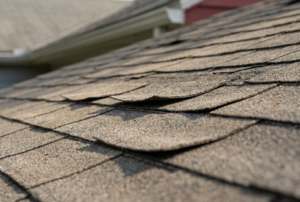
One annual roof inspection buys you eyes on what you cannot see from the driveway: flashing (the metal that seals the joints where the roof meets a chimney, a wall, or a vent), the valleys where two slopes meet and drain, granule loss (the sandy coating washing off the shingles), and fasteners backing out. Those failures arrive gradually, and a year is short enough to catch them at that stage.
Half of a good inspection happens from below. A leak shows up in the attic as a stain on the decking (the plywood your shingles are nailed to) long before it reaches a ceiling, and blocked soffit vents at the eaves explain most shingles that age faster than they should. The visit itself runs about an hour, and you do not need to be home for the roof portion.
Fall is the right slot in Michigan. A roof heading into 20 to 30 freeze-thaw cycles is tested at every joint, and a gap that sits harmlessly through August becomes an ice dam in February — a ridge of ice at the eave that backs meltwater under the shingles. Booking before winter puts any repair on the calendar while the weather allows it.
Key takeaway: One professional inspection a year, in the fall, covers a sound Mid-Michigan roof. Twice a year is a national default, not a requirement for your house.
Three Things Move Your Roof Off the Annual Schedule
| What you’re looking at | Once a year is fine | Go to twice a year |
|---|---|---|
| Age | Under 15 years | 15 or older, or past its warranty date |
| Material | Asphalt shingle in good shape, or steel | Asphalt past 15, any flat or low-slope section, any roof with a repair history |
| Exposure | Open sun, little overhead cover | Heavy tree cover overhead, or a north-facing slope that holds snow into spring |
Age does the most work. An architectural shingle roof in Michigan gives 18 to 22 real-world years against a 25-to-30-year warranty, and small failures start arriving faster than once a year near the end. Steel runs 40 to 50-plus years, so a fifteen-year-old steel roof is still young. Flat and low-slope sections go twice a year regardless of age: with no pitch to shed water, a seam that opens holds a puddle instead of draining. What annual maintenance buys you in service life breaks the numbers down by material.
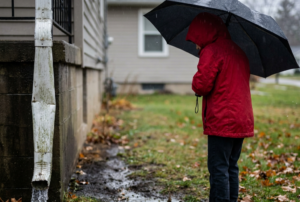
Exposure is the factor Mid-Michigan homeowners underestimate, and inland it comes down to what sits above the roof and which way it faces. Trees overhead hold moisture against the shingles and drop limbs and debris into the valleys. A north-facing slope gets the least winter sun, so snow sits longer and the surface stays damp well into spring, which is where moss and algae start. An open lot with no windbreak trades that for wind, which works at the ridge and the edges where shingles are fastened least.
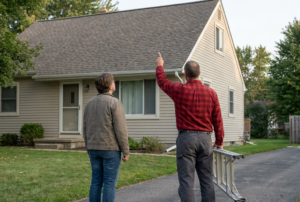
Binoculars from the ground cover a useful amount of this, though a ground-level look misses fastener and decking problems that only show from on top or inside the attic.
Key takeaway: Age, material, exposure. If two of the three land in the second column, put your roof on the twice-a-year schedule.
Some Years Your Roof Earns a Second Visit
Four things justify a call outside the annual schedule.
A storm that left branches in the yard. Wind strong enough to move limbs is strong enough to lift shingles, and that damage is often invisible from the ground. What to check after a Michigan storm covers the walk-around.
Something showing up inside. A stain on a ceiling, a musty attic, daylight through the roof boards, or a pile of granules at the bottom of a downspout. These are early signs that move the visit up; they do not wait for your calendar.
Buying or selling a house. This is where a paid third-party inspection or roof certification earns its cost over a free contractor visit. A contractor’s inspection tells you what the roof needs; a paid independent report carries an outside name a lender, a buyer, or an insurance file will accept. Most homeowners never need the second kind. Insurance rarely forces the question on its own, though a carrier can ask for an inspection when a policy is written or during a claim.
A new roof, or a warranty that expects proof. Many manufacturer warranties require documented periodic inspections, and gaps in that record are among the things that void coverage. A check after installation also catches workmanship issues while they are still the installer’s responsibility.
Key takeaway: Storms, interior symptoms, a sale, and warranty requirements override the schedule. Everything else can wait for fall.
A Good Inspection Can End With “Your Roof Is Fine”
An inspection worth having produces four things: photographs of your own roof rather than a stock example, a plain account of what is fine alongside what is not, repair options before replacement options, and a written record you keep.
One more thing matters as much: no pressure. A first-visit replacement quote on a roof with years of service left is worth a second opinion, and so is any recommendation that arrives without photos. The Better Business Bureau’s guidance on evaluating free roof inspection offers is a fair checklist to run against anyone who shows up at your door, Weather Vane Roofing included.
Weather Vane Roofing’s inspections are free, carry no obligation, and include drone footage. The standard the team holds is that a real inspection is allowed to end with “your roof is fine, see you next fall.” The $1,000 Repair Credit Guarantee makes that a policy rather than a sentence: replace within a year of a Weather Vane Roofing repair and the repair price comes off the new install, up to $1,000. That puts money behind recommending the repair, which over the long run is usually the cheaper option anyway.
Key takeaway: A trustworthy inspection shows you photos of your own roof and is willing to conclude that nothing needs doing.
Pick a Month and Keep It
Homeowners who never get surprised by their roof tend to have picked a month, put it on the calendar, and worked out what their roof’s age, material, and exposure say about whether once a year is enough. For most Mid-Michigan houses, it is.
Schedule Your Fall Inspection
Weather Vane Roofing inspects roofs free and with no obligation across Lansing, Howell, Brighton and Owosso, and the visit ends with a straight answer about whether your roof needs anything this year. Schedule an inspection, or ask Roofster whether your roof belongs on the annual schedule or the twice-a-year one.