Ridge Vents vs Box Vents vs Powered Vents: Best Attic Ventilation for Michigan
Have a question about this topic?
Have a question about this topic?
Ask Roofster — our AI roofing expert is available 24/7.
Ask Roofster — our AI roofing expert is available 24/7.
You are standing in your driveway looking up at your roof, wondering if those little metal boxes or spinning domes are actually doing their job. Or maybe you went up into your attic recently and noticed it feels like a sauna in the summer or a damp cave in the winter. Getting the best attic ventilation for your Michigan home is not just about letting hot air out. It is about protecting your roof deck, your insulation, and your home from the wild temperature swings we see here in the Midwest. Today, we are going to look at the ridge vent vs. box vent debate, explore when powered vents make sense, and help you figure out what your roof actually needs.
Roofing and Insulation: Why Ventilation Matters in Our Climate
A roof needs to breathe to survive. If your attic can’t cycle air properly, you end up with two major seasonal problems. In the winter months, warm and moist air from your living space naturally rises into the attic. If it gets trapped there, it condenses on the cold wooden roof deck, leading to frost, mold, and eventual wood rot. This trapped heat also melts snow on your roof unevenly. That melted water runs down and freezes at the cold eaves, creating damaging ice dams. In the summer, poor ventilation bakes your asphalt shingles from underneath, cutting their lifespan severely short. That is why checking your ventilation is a core part of our roofing services. It is never just about slapping new shingles on top of old problems. It is about making sure the entire roofing system works together to protect your investment.
Ridge Vent vs Box Vent: Comparing the Standard Exhaust Options
When homeowners ask us about the best attic ventilation, the conversation usually starts with a ridge vent vs box vent comparison. Both of these are passive systems, meaning they rely on the natural physics of hot air rising to exhaust heat.
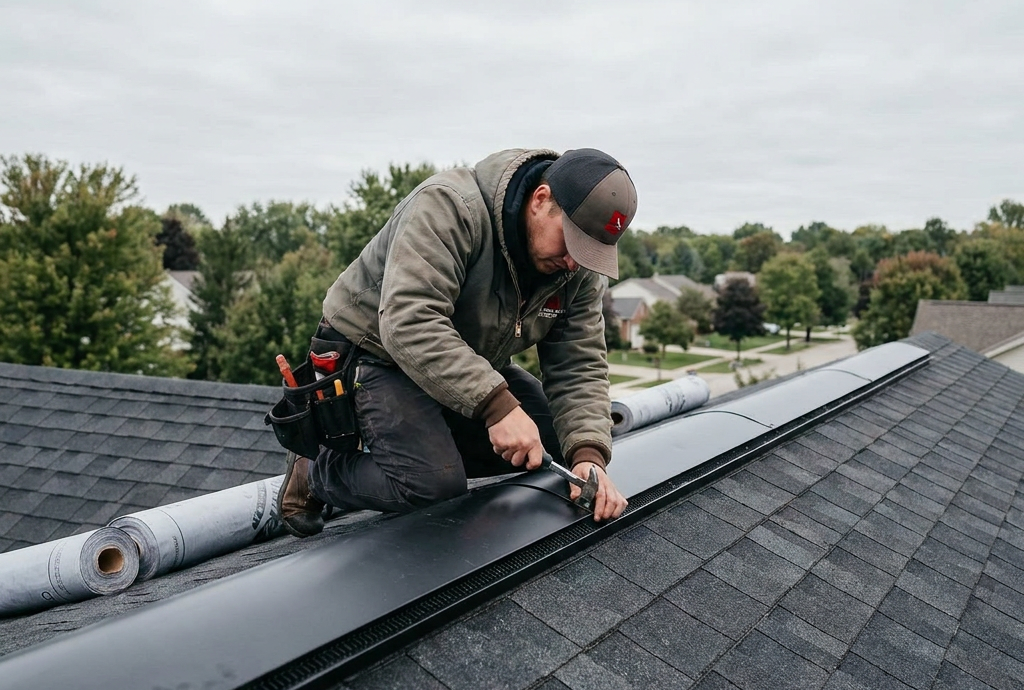
Ridge vents run continuously along the very peak of your roof. Because they sit at the absolute highest point, they do an excellent job of letting rising hot air escape naturally and evenly. For Michigan winters, we strongly recommend ridge vents with built-in snow baffles. These baffles prevent driving snow from getting into your attic while still allowing air to flow out freely. They also look much cleaner from the street since they blend seamlessly into the roofline.
Box vents (also called static vents or turtle vents) are the square, raised metal or plastic covers you see spaced out near the top of a roof. They work well, but they have a distinct disadvantage in our climate. Heavy lake-effect snow can completely bury box vents, temporarily stopping your attic ventilation until the snow melts. You also need several of them installed across the roof to match the exhaust capacity of a single continuous ridge vent.
Powered Vents and Turbines: More Moving Parts
You might be wondering about powered vents, which use an electric or solar-powered fan to actively pull hot air out of the attic. While they sound like a powerful upgrade, they can actually cause hidden problems if not used correctly. If your roof does not have enough intake ventilation at the eaves, a powered vent will forcefully suck air from wherever it can get it. Often, that means pulling your expensive, air-conditioned air right out of your living room through tiny gaps around light fixtures.
Turbine vents are those spinning metal domes that work on wind power. They are highly effective when the wind is blowing, but they can rust or squeak over time. Because they have moving parts, they will eventually wear out and need replacement. A good repair-first inspection will tell you if your current active vents just need a tune-up, or if you would be better off switching to a passive system that requires zero maintenance over its lifespan. You can read more about what to expect in our guide on how often you should have your roof inspected.
The Missing Half of the Equation: Soffit Intake
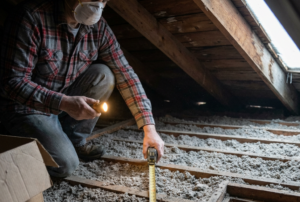
Here is the truth about attic ventilation that many contractors gloss over. You can install the most expensive exhaust vents in the world, but they will not work without proper intake. Vents at the peak of your roof need fresh air entering at the lowest point (the soffits or eaves) to push the hot air up and out. If your soffit vents are painted shut, clogged with dust, or blocked by poorly installed attic insulation, your exhaust vents are basically useless. Before we ever recommend replacing your roof vents, we thoroughly check your intake. Sometimes, the real fix is just calling for insulation services to pull some material back from the eaves so the house can finally breathe.
A Repair-First Approach: Why You Should Never Mix Vent Types
One of the most common attic ventilation problems in Michigan is a mix of different exhaust vent types on the same roof. A homeowner might have a ridge vent but then decide to add a powered fan, thinking more ventilation is always better. Mixing exhaust types actually short-circuits the entire system. Instead of pulling fresh air from the soffits, the powered fan will just pull air from the nearest ridge or box vent. This leaves the rest of your attic stagnant and creates a reverse cycle that can pull rain and snow right into the house.
We believe in a repair-first approach for every home we visit. We calculate your attic’s Net Free Area (NFA) to see exactly how much intake and exhaust you actually need by the square foot. We base our recommendations strictly on the math, not on trying to sell you the fanciest new gadget. If your current vents are sized correctly and just need a minor fix, we will tell you exactly that.
What We Recommend for Most Michigan Homes
For the vast majority of homes in our area, a continuous ridge vent paired with clear, unblocked soffit intake vents provides the absolute best attic ventilation. It is a highly efficient passive system, meaning there are no motors to burn out and no moving parts to break. The low-profile design keeps out the worst of our winter storms, and the continuous venting ensures every inch of your attic gets equal air circulation. However, every home is built a little differently. If your roof has a complex shape with a very short ridge line, box vents might actually be the better mathematical choice for your specific layout.
Get an Honest Assessment of Your Roof Ventilation
Figuring out your roof’s ventilation needs should not involve guesswork or high-pressure sales tactics. If you are noticing signs of trapped moisture, winter ice dams, or uncomfortably high energy bills, it is time for a professional look. We treat our customers like neighbors, which means we will explain the actual problem in plain language. If you just need a few soffit baffles cleared out, we will let you know. If the system needs an overhaul, we can walk you through the options, including flexible financing options to make the project comfortable for your budget. You can easily schedule an appointment for an honest inspection. If you want to chat with Roofster, our AI assistant, or arrange a virtual estimate, we offer those options as well to make the process as neighborly and easy as possible.