Storm Chasers vs. Local Roofers: Why It Matters Who Fixes Your Roof
Have a question about this topic?
Have a question about this topic?
Ask Roofster — our AI roofing expert is available 24/7.
Ask Roofster — our AI roofing expert is available 24/7.
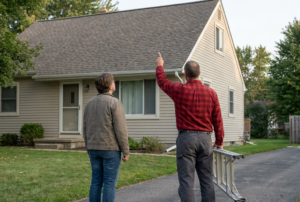
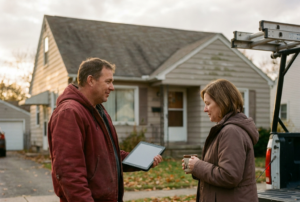
The storm moved through two hours ago. There are shingles in the yard, a wet spot spreading on the living room ceiling, and your phone is blowing up with texts from neighbors asking if you have damage too. Then someone knocks on your front door. He has a clipboard, a company polo, and a crew truck parked at the curb. He says he noticed missing shingles from the street and can get a crew up there tomorrow.
It feels like an answer to the problem you are standing in the middle of. And that is exactly why so many Michigan homeowners say yes.
This article is not going to tell you that every out-of-state roofer does bad work. Some are competent tradespeople who travel for a living. But the business model behind storm chasing creates risks that most homeowners do not see until the crew is gone and the phone number is disconnected. Understanding those risks before you sign anything is the single best way to protect your home, your insurance claim, and your money.
What Is a Storm Chaser in Roofing?
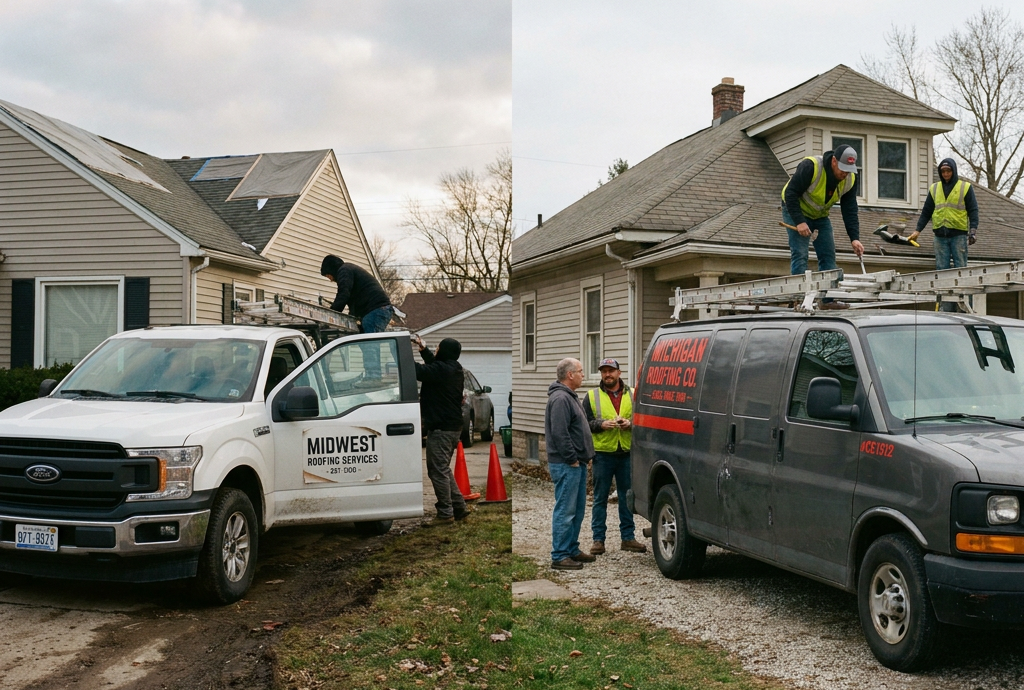
A storm chaser is a roofing operation that follows severe weather events from region to region. After a hailstorm or high-wind event, these crews set up temporary operations in the affected area, canvass neighborhoods door to door, close as many contracts as possible, subcontract the labor, and move to the next storm zone once the work dries up.
The term is not a slur. It describes a business model. Storm chasers typically operate under an LLC that may dissolve and re-form under a different name in the next state. They often have no permanent office, no long-term presence in the community, and no reason to come back if the roof fails in February.
That does not mean every door-to-door roofer after a storm is running a scam. But the structure of the business removes most of the accountability that protects you as a homeowner.
Key takeaway: A storm chaser is defined by the business model, not the quality of an individual person. The model trades long-term accountability for short-term volume.
Why Storm Chasers Are Hard to Say No To
Every article on this topic tells you to avoid storm chasers. Almost none of them acknowledge why that advice is so hard to follow in the moment.
Your roof is actively leaking. You called three local roofers and the earliest available appointment is two weeks out. The person in your driveway has a crew, materials on the truck, and is offering to start tomorrow. Your insurance adjuster has not even scheduled a visit yet, and this contractor says he will “handle everything” with your insurance company. When you are standing in your kitchen watching water drip into a bucket, “wait two weeks for a local guy” does not sound like practical advice.
That reaction is reasonable. The problem is not that homeowners are foolish for considering a storm chaser. The problem is that the short-term relief often creates long-term consequences that cost more than the original damage.
Key takeaway: The urgency is real. Acknowledging that makes it easier to slow down, get a tarp on the leak, and make a clear-headed decision about who does the permanent work.
The Real Risks, With Michigan Specifics
The standard warnings about storm chasers apply everywhere. But Michigan law adds consequences that many homeowners do not realize until they are already in trouble.
Deductible Waivers Are a Felony in Michigan
If a contractor offers to “cover” or “waive” your deductible, that is not a discount. Under Michigan law, it constitutes insurance fraud. Both the contractor and the homeowner can face legal consequences. Your insurer can void your policy for breach of contract, and the claim can be referred to the Michigan Department of Insurance and Financial Services (DIFS) for investigation.
A legitimate contractor will never offer to absorb your deductible. That money is your contractual obligation to your insurer. If someone offers to make it disappear, they are either inflating the claim to cover the difference or cutting corners on materials and labor to absorb the cost. Neither outcome protects you.
Your Manufacturer Warranty May Be Void Before the First Shingle Is Nailed
GAF, Owens Corning, and CertainTeed all require certified installers for their material warranties to remain valid. If an uncertified storm chaser installs the shingles, the manufacturer warranty is void at the moment of installation, regardless of the shingle quality. You have a new roof with no material warranty backing it.
This is separate from the workmanship guarantee. Even if the storm chaser hands you a piece of paper promising a “lifetime warranty,” the manufacturer will not honor claims on materials installed by someone outside their certification program. And that piece of paper is only worth something if the company still exists when you need it. Industry data suggests that up to 96% of new roofing companies in storm-heavy states close within five years.
What We See When We Fix Storm Chaser Work
Local roofers across Michigan inherit storm chaser failures on a regular basis. The patterns are consistent: improper flashing at walls and chimneys, missing ice and water shield in valleys (which Michigan building code requires), nails driven above the manufacturer’s nail line, and ridge vents that are not sealed against wind-driven rain.
These are not cosmetic issues. They lead to leaks, sometimes within the first winter. By the time the homeowner discovers the problem, the storm chaser’s phone number is disconnected and their LLC has been dissolved.
The worst-case scenario we see: the homeowner already collected their insurance payout, paid the storm chaser in full, the work fails, and now they need a second roof installation at full out-of-pocket cost because the insurance claim is closed.
The Assignment of Benefits Trap
Some storm chasers ask homeowners to sign an Assignment of Benefits (AOB) document. This transfers your insurance claim rights to the contractor, who then negotiates directly with your insurer. It can lead to inflated invoices, unnecessary work billed to your policy, or even lawsuits filed in your name without your knowledge. Read every document carefully and consult your insurer before signing anything that transfers your claim rights.
Key takeaway: Michigan law makes deductible waivers a felony, and manufacturer warranties require certified installers. These are not opinions or preferences. They are legal and contractual facts that determine whether your new roof is actually protected.
How to Spot a Storm Chaser in Your Driveway
Not every warning sign means you are dealing with a bad actor. But if you see several of these at once, slow down before signing anything.
- Showed up unsolicited within 48 hours of a storm. Legitimate local contractors are busy answering calls from existing customers after a major weather event. They are not canvassing neighborhoods.
- Out-of-state license plates or magnetic signs on vehicles. A permanent business has permanent signage.
- No verifiable Michigan contractor license. All roofing contractors in Michigan must hold a Residential Builder or Maintenance and Alteration Contractor (MAC) license through LARA.
- Pressure to sign a contract before your insurance adjuster visits. A contractor who needs your signature today is working on their timeline, not yours.
- Offers to cover or waive your deductible. This is insurance fraud in Michigan. Walk away.
- Demands a large deposit or full payment upfront.
- No local office address. A PO box or a hotel is not a business address.
- Cannot provide local references with verifiable addresses.
- “We’ll handle everything with your insurance.” A good contractor works with your adjuster.
Key takeaway: The single fastest check is the Michigan LARA license database. If the contractor cannot give you a verifiable Michigan license number, the conversation is over.
What a Local Roofer Does Differently
The difference between a storm chaser and a local roofing contractor is not just geography. It is a different business model built on accountability.
A Michigan-licensed local roofer carries the state-required insurance, maintains manufacturer certifications that keep your material warranty valid, and pulls permits so the work is inspected by your municipality. They inspect the roof before quoting, not from the driveway. They attend the adjuster’s inspection to advocate for the full scope of damage.
Most importantly, a local roofer is still here when something goes wrong. The office is twenty minutes away. The owner lives in the community. The reputation is built on decades of work in the same neighborhoods, not on a six-week sprint through a storm zone.
At Weather Vane Roofing, our Repair-First approach means we tell you when you do not need a full replacement. Our $1,000 Repair Credit Guarantee means that if you start with a repair and later need a replacement, the cost of that repair applies as credit toward the new roof.
Key takeaway: A local roofer’s business depends on being right and being here next year. A storm chaser’s business depends on volume and moving on.
Michigan Storm Chaser Season: When to Be on Guard
Michigan’s severe weather season runs from April through August, with the highest concentration of damaging storms in May, June, and July. Southeast Michigan sits in a recognized hail corridor, and the state averages 15 to 20 tornadoes per year, peaking in June.
After any storm that produces widespread roof damage, expect out-of-state roofing trucks and door-to-door canvassers within 48 hours. March 2026 already brought tornadoes and 70-plus-mph winds to the Metro Detroit area, and forecasters expect an active storm season ahead.
The best preparation is having a relationship with a local roofer before you need one. A pre-storm inspection identifies vulnerabilities, gives you a baseline for any future insurance claim, and means you already know who to call when the storm hits.
Key takeaway: Storm chasers follow a predictable seasonal pattern. Having a trusted local roofer before storm season is the simplest way to avoid the pressure entirely.
What to Do If You Already Hired a Storm Chaser
If you are reading this after the fact, you still have options.
- Check whether the work was permitted and inspected. Contact your local building department. If no permit was pulled, the work may not meet code.
- Get a licensed Michigan contractor to inspect the roof. Document every deficiency with photos and written notes.
- Review your manufacturer warranty status. If the installer was not certified, contact the manufacturer to ask whether warranty coverage can be reinstated through certified rework.
- Check for deductible fraud. If the contractor offered to waive your deductible, contact Michigan DIFS.
- Review any Assignment of Benefits documents you signed. Consult your insurer about what actions have been taken in your name.
You may also want to understand what your roof warranty does and does not cover.
Frequently Asked Questions
What is a storm chaser in roofing? A storm chaser is an out-of-state roofing operation that follows severe weather events, sets up temporarily in affected areas, canvasses neighborhoods aggressively, and moves on after completing as many contracts as possible.
How do you spot a storm chaser roofer? Look for unsolicited door knocking within days of a storm, out-of-state plates, no verifiable Michigan LARA contractor license, pressure to sign before your insurance adjuster visits, and offers to waive your deductible.
Is it bad to hire a storm chaser for roofing? The risks are significant. Storm chasers may void your manufacturer warranty by using uncertified installers, leave you without recourse when workmanship fails, and expose you to insurance fraud if they offer to cover your deductible.
Can a roofer legally waive my deductible in Michigan? No. Offering to waive or cover a homeowner’s deductible is considered insurance fraud under Michigan law. Both the contractor and the homeowner can face consequences.
How do I find a reputable roofer after a storm? Verify their Michigan LARA license, confirm manufacturer certifications, ask for local references, check that they carry proper insurance, and make sure they will attend the adjuster’s inspection with you.
Get an Honest Assessment From a Roofer Who Will Still Be Here Next Year
If your roof took damage in a recent storm, or if someone knocked on your door with an offer that felt too easy, we are happy to take a look. Weather Vane Roofing offers free storm damage inspections across Mid-Michigan, and our Repair-First approach means we will tell you what your roof actually needs, not what generates the biggest invoice.
Schedule a free inspection. Ask Roofster.