Best Time to Replace a Roof in Michigan: A Planning Guide for Homeowners
Have a question about this topic?
Have a question about this topic?
Ask Roofster — our AI roofing expert is available 24/7.
Ask Roofster — our AI roofing expert is available 24/7.
You just got a quote. Or maybe you noticed granules in the gutter again. Either way, you know a roof replacement is coming, and now you need to figure out when to pull the trigger.
The honest answer: there is no single best month. The right time depends on how urgent your situation is, what material you are installing, and how far ahead you can plan. Michigan’s weather compresses the decision more than most states, so the planning window matters as much as the season itself.
Michigan’s Building Season Is Shorter Than You Think
Most roofing work in Michigan happens between April and October. That is roughly seven months of reliable installation weather, compared to ten or eleven months in southern states. The compressed season means contractor schedules fill faster, and homeowners who wait until summer to call often find themselves booking into late fall.
Spring opens the window, but it also brings rain. Summer offers the most consistent conditions, but it is peak demand, which means higher prices and longer wait times. Fall is the sweet spot for many homeowners because temperatures are mild, humidity drops, and crews can work efficiently. Winter is possible in some cases, but it comes with real limitations.
Key takeaway: Michigan gives you about seven months of ideal roofing weather. Planning a few months ahead is the difference between choosing your timeline and being stuck with whatever is available.
Temperature Matters More Than the Calendar
The calendar date matters less than what the thermometer reads. Asphalt shingles need temperatures above 40 degrees Fahrenheit for the seal strips (the adhesive layer that bonds each shingle to the one below it) to activate properly. Below that threshold, crews can hand-seal each shingle, but it adds labor time and cost.
Metal roofing and rubber membranes (EPDM) are more temperature-flexible. Metal panels can be installed in colder weather without adhesive concerns, though crew safety on icy surfaces becomes the limiting factor. If you are considering a material other than standard asphalt shingles, the installation window may be wider than you think.
Key takeaway: Asphalt shingles need 40-degree-plus weather for a standard install. Metal and rubber roofs have more flexibility in colder months.
Planning by Your Situation
Every article about roof timing gives you the same four-season breakdown. That is fine if you are browsing, but if you actually need a roof, the real question is: what is your situation right now?
Your Roof Is Leaking or Damaged
Do not wait for the ideal season. A leak that sits through spring rain or summer storms will cause more damage to your decking, insulation, and ceilings than a slightly off-season install. The practical move is to get a repair that stabilizes the roof now, then plan the full replacement for the best available window. Weather Vane’s Repair-First approach backs this with up to $1,000 in repair credit toward your replacement if you move forward within a year.
You Are Working With Insurance
Storm damage claims run on the adjuster’s timeline, not yours. Once your claim is approved, most policies expect work to begin within a reasonable window. That might land you in winter or early spring, which is fine with the right crew and the right preparation. If you are navigating a claim for the first time, understanding the filing process before scheduling the work helps you avoid gaps in coverage.
You Have Time to Plan
This is the best position to be in. If your roof has a year or two left but replacement is on the horizon, booking for September or October typically gives you the best combination of weather, crew availability, and pricing. May and June are also strong months before the summer rush kicks in.
The key is lead time. Calling in September to book a September install rarely works. Most reputable contractors are booked four to eight weeks out during peak season. Call in early summer for a fall install, or in late winter for a spring start.
You Want the Best Price
Off-season work (late November through February) sometimes comes with better availability and pricing because demand drops. But weigh that against the weather risk and the possibility of hand-sealing shingles. For many homeowners, the savings do not outweigh the tradeoffs. Financing options can help spread the cost of a peak-season install if budget flexibility is the main concern.
Key takeaway: Match your timing to your situation. Urgent problems should not wait, planned replacements benefit from booking ahead, and off-season pricing comes with real tradeoffs.
What Contractors Wish You Knew About Scheduling
The single biggest scheduling mistake homeowners make is assuming they can call in September and get on the schedule that month. Michigan’s roofing season is compressed, and the spring rush after storm season fills calendars fast.
Here is what helps: get an inspection early. Even if you are not ready to commit, an inspection gives you a clear picture of your roof’s condition and how much time you have. That way, you can choose your season instead of being forced into one.
Contractors also see a predictable spike in calls after every major storm. If a hailstorm hits your area, the phones ring for weeks. Homeowners who already have an inspection on file and a relationship with a local roofer move through that bottleneck faster than those starting from scratch.
Key takeaway: Book four to eight weeks ahead during peak season. An early inspection gives you the information to plan on your terms.
Can You Replace a Roof in a Michigan Winter?
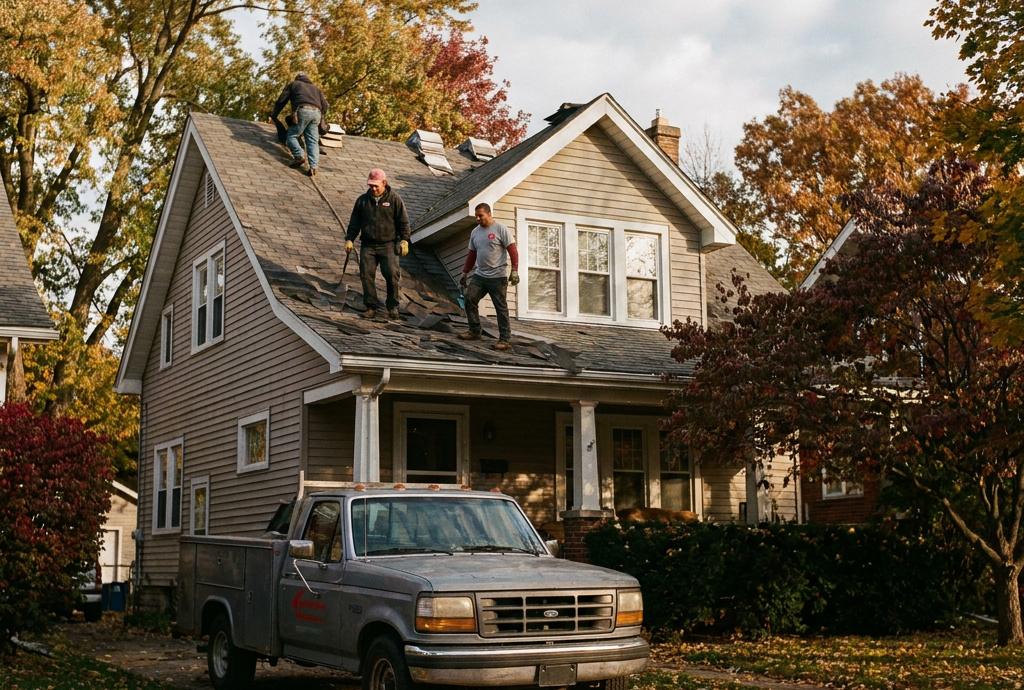
Yes, with caveats. Winter installs happen regularly in Michigan, especially when insurance deadlines or emergency damage force the timeline. Crews hand-seal shingles below the 40-degree threshold, materials need proper storage to stay flexible, and shorter daylight hours extend the project timeline.
Winter replacements make sense when the alternative is worse: a damaged roof sitting through months of snow and freeze-thaw cycles, or an insurance claim that expires if you wait. They make less sense when you have the flexibility to wait for spring. If your roof has problems that surfaced during winter, a temporary repair can often bridge the gap until conditions improve.
Key takeaway: Winter installs are real and sometimes necessary. If you have the choice, spring or fall is a better bet.
Start With What You Know
The best time to replace your roof is the time that fits your situation, your budget, and your roof’s condition. For most Michigan homeowners, that means planning ahead, getting an inspection before you need one, and booking early enough to land the window you want.
Weather Vane Roofing offers free inspections at both our Lansing and Owosso locations so you can plan from facts instead of guesses. Whether you are six months out or dealing with damage right now, a conversation with a local roofer is the first step. Schedule an inspection or ask Roofster a quick question to get started.