How to Compare Roofing Estimates: What to Look For Beyond the Price
Have a question about this topic?
Have a question about this topic?
Ask Roofster — our AI roofing expert is available 24/7.
Ask Roofster — our AI roofing expert is available 24/7.
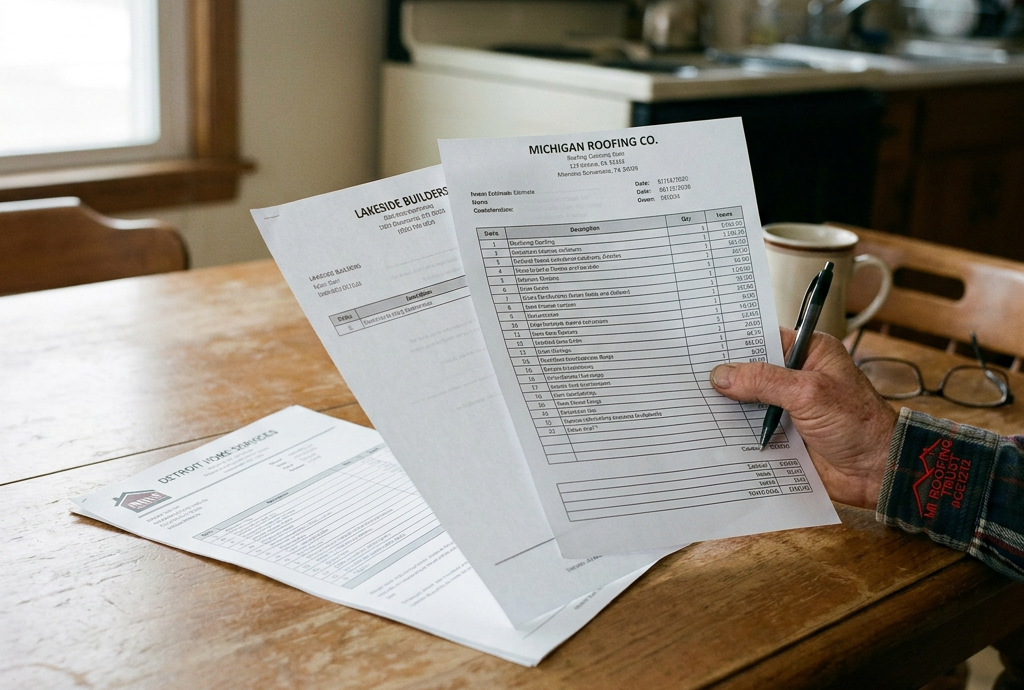
Three quotes are sitting on your kitchen table. One says $11,200. Another says $16,800. The third lands somewhere in between. They all claim to cover the same roof, but the paperwork looks nothing alike. One is a single page. Another runs four pages with line items you’ve never heard of. And you’re left wondering: is the cheap one cutting corners, or is the expensive one padding the bill?
That gap between estimates is rarely about overcharging. It’s about scope. What’s included, what’s left out, and what assumptions each contractor is making about the work your roof actually needs.
What Every Roofing Estimate Should Include
A complete estimate is a commitment in writing. If any of these items are missing, you don’t have an estimate. You have a guess.
Shingles (brand, product line, color) — $3,000 – $8,000. The biggest variable. “Asphalt shingles” is not a spec. You need the manufacturer, product name, and warranty tier.
Underlayment & ice/water shield — $1,500 – $2,500. Michigan building code requires ice and water shield along eaves. Some contractors skip it to lower the bid.
Tear-off & disposal — $1,000 – $2,500. Removing the old roof before installing the new one. If this isn’t listed, ask whether they’re layering over existing shingles.
Drip edge — $200 – $500. Metal flashing along the roof edges. Small cost, but skipping it voids most manufacturer warranties.
Flashing (chimney, vents, walls) — $300 – $800. Reusing old flashing is the most common shortcut. New flashing should be specified.
Ventilation — $300 – $1,200. Ridge vents, soffit vents, or powered vents. Inadequate ventilation shortens shingle life and voids warranties.
Labor — $2,500 – $5,000. Should be a separate line. Bundled “materials and labor” pricing makes it impossible to compare bids.
Cleanup & protection — Included or $200 – $500. Tarps, magnetic nail sweeps, property protection.
Permits — $75 – $300. Required in most Michigan municipalities.
Warranty terms — Manufacturer warranty on materials AND contractor workmanship warranty. Both should be stated with specific durations.
Key takeaway: If an estimate doesn’t break out materials, labor, and warranty terms as separate items, you can’t compare it meaningfully against another bid.
Side by Side: What a $5,000 Difference Actually Looks Like
Every roofing article tells you to “compare line by line.” None of them show you what that actually looks like. Here’s a simplified example based on a 2,000-square-foot Michigan home:
ESTIMATE A (Detailed) — $14,800:
- Shingles: Owens Corning Duration, Driftwood, 50-yr limited
- Underlayment: Synthetic underlayment, full deck
- Ice & water shield: 6 feet from eave edge, per Michigan code
- Tear-off: Full tear-off to decking, 1 layer
- Drip edge: New aluminum drip edge, all edges
- Flashing: New step and chimney flashing, galvanized steel
- Ventilation: 4 ridge vents + soffit intake, balanced system
- Decking repair: Up to 2 sheets plywood included, $75/sheet after
- Cleanup: Magnetic sweep, tarp system, daily cleanup
- Permits: Included, pulled by contractor
- Workmanship warranty: Lifetime
ESTIMATE B (Vague) — $9,800:
- Shingles: “Architectural shingles”
- Underlayment: Not mentioned
- Ice & water shield: Not mentioned
- Tear-off: “Remove old roof”
- Drip edge: Not mentioned
- Flashing: “Reflash as needed”
- Ventilation: Not mentioned
- Decking repair: Not mentioned
- Cleanup: “Clean up job site”
- Permits: Not mentioned
- Workmanship warranty: “2-year warranty”
Estimate B isn’t necessarily a scam. But it leaves questions that could become expensive answers once the crew is on your roof: Will they install ice and water shield? Are they replacing the flashing or reusing what’s there? What happens if the decking underneath is rotted?
The $5,000 difference isn’t padding. It’s everything Estimate B didn’t account for.
Key takeaway: The cheapest estimate often isn’t the lowest cost. It’s the one with the most assumptions hidden behind vague language.
Why Roofing Estimates Vary So Much
Two honest contractors can quote the same roof at different prices for legitimate reasons:
Material selection. A 50-year architectural shingle costs more than a 25-year three-tab. Both are “asphalt shingles.” The estimate should name the specific product.
Scope assumptions. One contractor may include full tear-off while another plans to layer over the existing roof. Layering is cheaper upfront but can mask underlying problems and may void the manufacturer’s warranty.
Ventilation and code work. A contractor who evaluates your attic ventilation and includes corrections will quote higher than one who ignores it. Proper ventilation is required by Michigan building code and most manufacturer warranties.
Overhead and insurance. Licensed, insured contractors with workers’ comp coverage have higher operating costs than a crew working out of a pickup truck. That’s not waste. That’s your protection if someone gets hurt on your property.
A bid that comes in 20% below the average isn’t always a better deal. Industry guidance suggests anything more than 10% below the average of your quotes deserves a closer look at what’s being left out.
Key takeaway: Price differences between estimates usually trace back to scope, materials, or credentials. Ask each contractor to explain theirs.
Red Flags That Should Make You Ask More Questions
Not every low quote is a red flag, and not every high quote is honest. But certain patterns deserve a direct conversation before you sign anything:
No line-item breakdown. A single lump sum with no detail means you have no way to know what you’re paying for or to hold the contractor to it later.
No mention of ice and water shield. In Michigan, this isn’t optional. It’s a code requirement for the first six feet from the eave.
Pressure to sign today. A contractor who won’t let you take the estimate home and compare it is a contractor who doesn’t want you to compare it. Reputable roofers give you time. Storm chasers and high-pressure outfits rely on urgency.
No proof of licensing. Michigan requires roofing contractors to be licensed through LARA.
Warranty gaps. A manufacturer warranty on shingles without a contractor workmanship warranty leaves you exposed. Shingles don’t fail on their own. They fail when installation errors go uncovered.
No mention of permits. If the contractor isn’t pulling permits, there’s no inspection. No inspection means no third-party verification that the work meets code.
Key takeaway: Red flags aren’t always about price. They’re about what the estimate doesn’t say.
Before You Replace: Does the Roof Actually Need It?
One question most homeowners skip when comparing replacement estimates: does the roof actually need replacing?
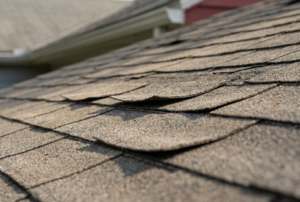
A few missing shingles after a windstorm, a small leak around a pipe boot, or minor flashing damage may not require a full tear-off. A targeted repair could solve the problem at a fraction of the cost.
This is where getting an honest inspection matters more than getting the most estimates. Understanding the difference between repair and replacement costs can save you thousands.
Weather Vane Roofing’s approach starts with repair first. If a repair handles the problem, that’s what we recommend. And if you do need a full replacement within a year of that repair, we apply up to $1,000 of the repair cost as a credit toward your new roof. You don’t lose money by starting with the honest answer.
Key takeaway: The best estimate might be the one that tells you not to replace your roof yet.
Questions to Ask Every Contractor Before You Decide
Once you have estimates in hand, a short phone call or follow-up visit can reveal which contractor is worth your trust. Ask these directly:
- What specific shingle product are you quoting, and what’s the manufacturer warranty?
- Are you tearing off the old roof or layering over it?
- Is ice and water shield included? How many feet from the eave?
- Will you pull permits and schedule the municipal inspection?
- What’s your workmanship warranty, and what does it cover?
- Can I see your Michigan LARA license number and proof of insurance?
- What happens if you find rotted decking underneath? How is that priced?
- How do you handle financing if I need it?
The contractor who answers every question without hesitation is the one who put the work into writing a thorough estimate in the first place.
The Estimate Tells You Who You’re Hiring
A roofing estimate isn’t just a price. It’s a preview of how the contractor operates. The one who takes time to spec materials, break out costs, explain warranty terms, and tell you when a repair makes more sense than a replacement is the one who will treat your home the same way during the job.
If you’re comparing estimates right now and want a benchmark for what a thorough one looks like, request a free estimate from Weather Vane Roofing.
We’ll walk your roof, document what we find, and give you a line-item quote you can hold up against any other bid. If a repair handles it, we’ll tell you that instead.