Hail Damage on Your Roof: How to Identify It and What to Do Next
Have a question about this topic?
Have a question about this topic?
Ask Roofster — our AI roofing expert is available 24/7.
Ask Roofster — our AI roofing expert is available 24/7.
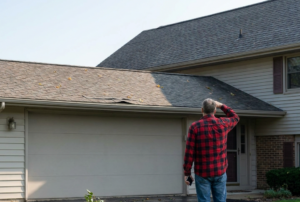
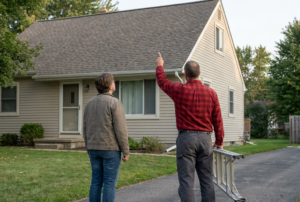
After a hailstorm, plenty of Michigan homeowners stand in their yard looking up and wondering: is that damage, or was my roof already like that? Knowing the difference matters. It protects you from filing a claim on normal wear, from ignoring real damage, and from getting talked into work you don’t need.
What Hail Damage Looks Like
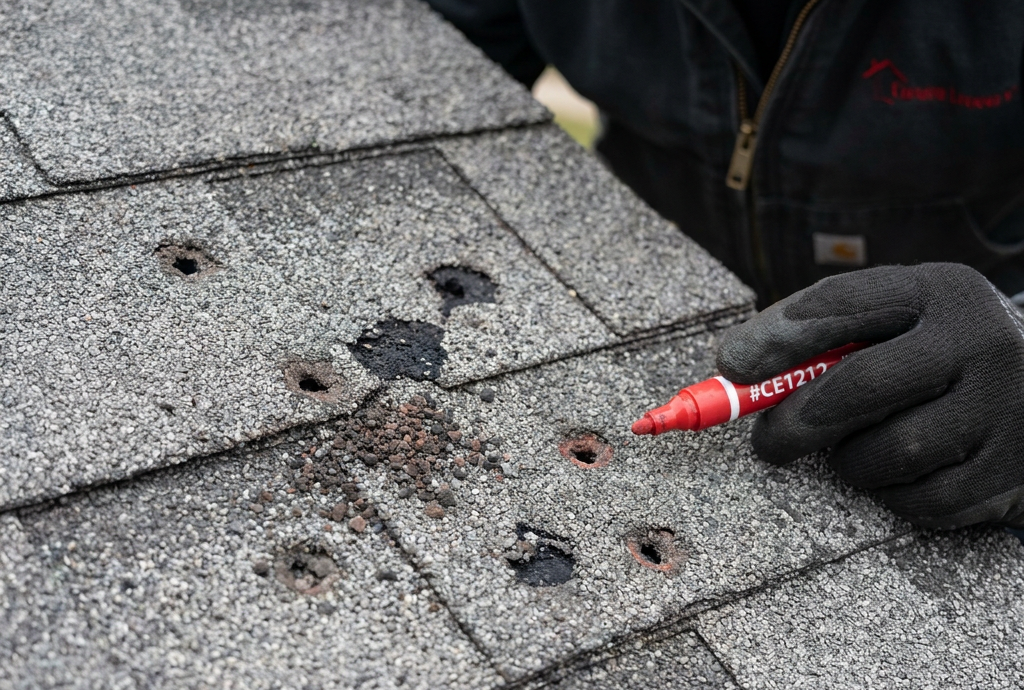
The defining feature of hail damage is randomness. Hailstones don’t follow paths or patterns. They strike across the entire roof surface, leaving scattered marks that vary in size.
On asphalt shingles, a hail strike knocks granules (the gritty coating on the surface) loose or presses them into the mat underneath. The result is a dark, circular soft spot with sharp edges. Press it with your thumb and it gives slightly, like a bruise on an apple. That’s different from the gradual, even thinning you see with normal aging.
Check the soft metals around your roof too. Aluminum vents, exhaust caps, flashing, and gutters dent easily. Circular dents on these components confirm hail hit your property. The same goes for downspouts, window screens, and outdoor AC units. Adjusters use this collateral damage as evidence, so document it before anything gets cleaned up.
Quarter-sized hail (about 1 inch) damages most standard asphalt shingles, especially roofs older than 10 years. Golf-ball-sized hail causes significant damage to nearly all roofing materials. Mid-Michigan sees both regularly from April through July.
What Gets Confused With Hail Damage
Blistering happens when moisture inside a shingle expands in the heat. These pits have steep sides and a small exposed area. Hail dents are shallower, wider, and surrounded by displaced granules. Blistering also shows zero collateral damage on metals.
Granule loss from aging is uniform. The shingle surface looks washed out across large sections rather than marked in scattered circles.
Foot traffic marks follow walkable paths: along ridges, from the ladder to vents. Hail doesn’t follow routes.
This matters in both directions. A storm chaser may point to blistering and call it hail to sell you a replacement. An adjuster may see ambiguous damage and call it wear to deny a claim. For a closer look at these differences, see our guide on how to tell hail damage from normal wear.
What to Do After You Suspect Hail Damage
Document from the ground. Photograph your roof from every angle you can safely reach, plus close-ups of gutters, vents, siding, and your AC unit. Note the date and approximate time of the storm.
Pull a NOAA storm report. Search weather.gov for your area and date. A documented hail report for your zip code is primary evidence that adjusters accept.
Get a professional inspection before calling insurance. A local roofer can tell you what you’re dealing with before you file. If it’s normal wear, you’ve saved yourself a claim on your CLUE report (the insurance industry’s record of your claims history). If it’s real damage, you’ll have a professional assessment backing your claim from day one.
File with documentation. Contact your insurer with your photos, the NOAA report, and your contractor’s assessment. Michigan policies generally require filing within 12 to 24 months, but sooner is always better. Damage that’s obvious in June is harder to prove after a Michigan winter.
Have your roofer present for the adjuster’s inspection. Your contractor can walk the roof with the adjuster and make sure nothing gets missed. Our guide to filing a roof insurance claim in Michigan covers the full process.
Repair vs. Replace After Hail
Not every hail-damaged roof needs a full replacement. Localized damage on one slope is often repairable at a fraction of the cost. Spot repairs typically run $150 to $1,500, compared to $11,000 to $15,000 for a full replacement claim.
Widespread damage across multiple slopes, especially eight or more hits per test square consistently, usually makes replacement the better long-term call. Your roofer and adjuster should both weigh in.
Weather Vane’s $1,000 Repair Credit Guarantee means that if you start with a repair and need a replacement within a year, the repair cost applies as credit toward the new roof. You don’t lose money by starting with the conservative option.
Schedule a Free Hail Damage Assessment
If you’re looking at your roof after a storm and wondering what you’re seeing, we’ll come take a look. Weather Vane Roofing provides free hail damage assessments across Lansing, Howell, Brighton, Owosso, and the surrounding Mid-Michigan area. We’ll tell you what we find, even if the answer is that your roof is fine.
Schedule a free assessment or ask Roofster if you have a quick question first.