Tornado and High-Wind Damage to Roofs: What Michigan Homeowners Need to Know
Have a question about this topic?
Have a question about this topic?
Ask Roofster — our AI roofing expert is available 24/7.
Ask Roofster — our AI roofing expert is available 24/7.
Michigan is in the middle of its most active tornado stretch in recorded history. The state confirmed 33 tornadoes in 2025, the third-highest year on record. And 2026 has already exceeded the annual average before peak season even ends. An EF3 hit southwest Michigan in March. Severe thunderstorms tore through the Ann Arbor area in April. If wind hasn’t touched your roof yet this year, the odds say it still might.
Whether you’re reading this because something already happened or because the forecast has you worried, the information is the same. Here’s what wind actually does to a roof, how to respond, and how to make sure you’re protected.
What Wind Actually Does to Your Roof
Wind doesn’t just blow shingles off from above. It creates pressure differentials that generate uplift (upward suction force) underneath the roofing material. The wind flowing over your roof drops air pressure on top while pressure underneath stays the same. That difference pulls the roof structure upward from below.
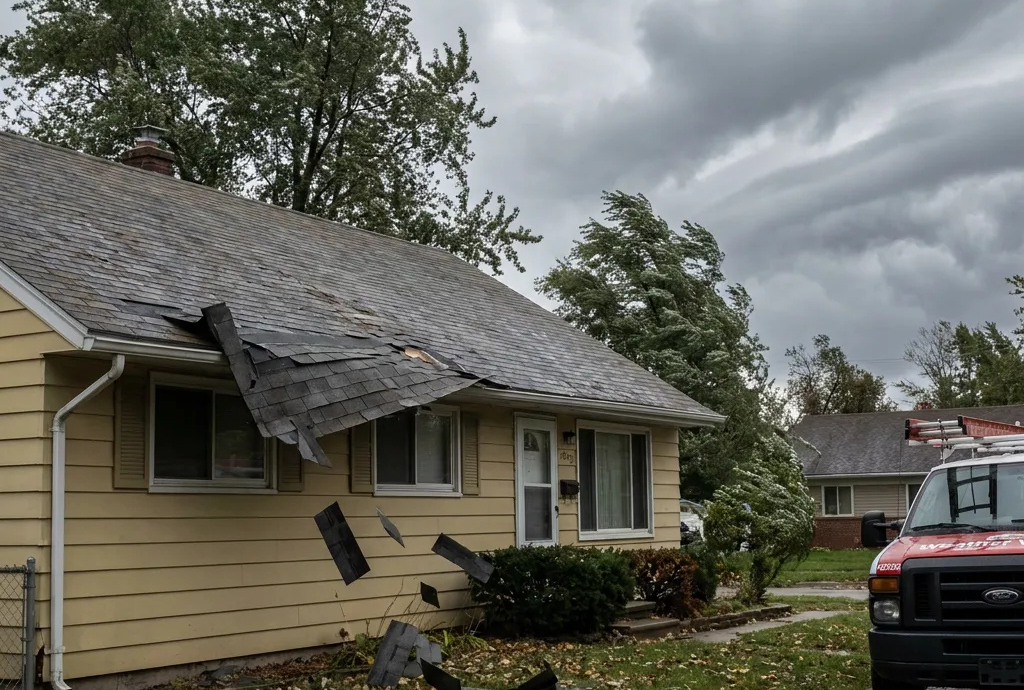
Corners, ridgelines, and edges take the worst of it. These are aerodynamic loading zones where wind accelerates and uplift forces are strongest. That’s why storm damage almost always starts at the perimeter and works inward.
There’s a critical difference between losing shingles and losing sheathing (the plywood or OSB panels that form the structural deck beneath the shingles). Missing shingles are visible from the ground. Compromised sheathing attachment is not. A roof can look mostly intact from the driveway while the deck underneath has pulled away from the rafters. That hidden damage is what leads to leaks, structural failure, and much larger repair bills down the road.
Key takeaway: Wind damage isn’t always visible from the ground. If your area took high winds, get a professional inspection even if the roof looks fine.
Wind damage isn't always visible from the ground. If your area took high winds, get a professional inspection even if the roof looks fine.
Tornado Damage vs. Straight-Line Wind Damage
Most Michigan wind damage doesn’t come from tornadoes. It comes from straight-line winds: severe thunderstorm outflows, derechos (widespread, long-lasting windstorms), and downbursts. These events produce sustained winds of 60 to 100+ mph without any rotation, and they cause the same kinds of roof damage that tornadoes do.
The visual difference matters for documentation. Tornado damage shows chaotic, multi-directional debris patterns because the rotating winds scatter material in every direction. Straight-line wind damage pushes debris consistently in one direction across a wide area. Tornadoes cut a narrow path. Straight-line events can stretch for miles.
Michigan’s southern Lower Peninsula sits in what storm researchers informally call “Wolverine Alley,” a corridor where warm, humid air from the Gulf meets cooler Great Lakes air. June is historically the peak month, with over 300 recorded tornadoes in the state’s history concentrated in that window.
The practical point for homeowners: your standard Michigan HO-3 policy covers both tornado and straight-line wind damage identically under the windstorm peril. The type of wind event doesn’t change your coverage. But documenting the damage pattern helps your adjuster process the claim faster.
Key takeaway: Straight-line winds are more common than tornadoes in Michigan and cause similar roof damage. Both are covered by standard homeowners insurance.
Immediate Steps After High-Wind or Tornado Damage
Do not go on the roof. A compromised deck can give way under your weight without warning. Stay on the ground.
Before approaching the house, check for gas leaks, downed power lines, and any signs of structural shifting like sagging rooflines, cracked walls, or doors that won’t close. If the structure seems unsafe, leave the property and contact local emergency management.
Once it’s safe to approach, document everything from ground level:
- Timestamped photos and video of every side of the house
- Close-ups of visible damage: missing shingles, exposed underlayment, dented flashing, debris
- Interior water intrusion: ceiling stains, wet walls, dripping
- Attic inspection only if safely accessible from inside
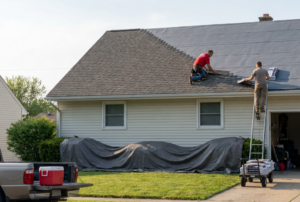
If you have an opening in the roof, cover it with a heavy-duty tarp extending at least four feet beyond the damage on all sides. Save your receipts. Insurance reimburses reasonable emergency mitigation costs, including tarping materials and contractor emergency-tarp services.
For a full step-by-step walkthrough, our storm damage checklist for Michigan homeowners covers the complete process from first hour through final repair.
Filing Your Insurance Claim in Michigan
Standard Michigan HO-3 policies cover wind and tornado damage as a named peril. That includes tornado-driven rain that enters through a roof opening. It does not include ground-level flooding, which requires a separate flood policy.
File your claim immediately. Most Michigan policies require filing within one year of the event, though some allow two years. Do not make permanent repairs before the adjuster inspects. Emergency tarping and temporary protection are expected and encouraged, but hold off on anything beyond that until the adjuster has documented the scope.
Do not accept the first settlement without having a contractor review it. Adjusters often underestimate the scope of wind damage, especially hidden sheathing issues that aren’t visible without removing shingles. If your claim is denied or unreasonably delayed, you can file a complaint with the Michigan Department of Insurance and Financial Services (DIFS).
One question we hear constantly: “Will this raise my rates?” A single weather-related claim is classified as an act-of-god event and typically does not increase your premium.
Our guide to filing a roof insurance claim in Michigan walks through the entire process, including what to bring to the adjuster visit.
How to Spot a Storm Chaser
After any significant wind event in Michigan, out-of-state door-knockers show up within 24 to 48 hours. They’re called storm chasers for a reason: they follow the weather, collect payments, do substandard work, and leave the state before you discover the problems.
Red flags to watch for:
- No local business address or Michigan phone number
- Out-of-state license plates on the work truck
- “We’ll handle everything with your insurance” without a written estimate
- Demands for large upfront payments or cash deposits
- Pressure to sign a contract immediately
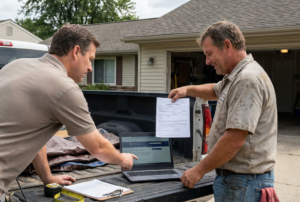
Verify any contractor through the Michigan LARA license lookup, check their BBB profile, and look for Google reviews with actual project photos from Michigan homes. If they can’t produce a Michigan contractor license number on the spot, that tells you what you need to know.
Our article on storm chasers vs. local roofers covers this topic in full detail, including what to look for in a legitimate contractor’s paperwork.
Repair Costs and When to Repair vs. Replace
Michigan wind damage repair costs vary widely depending on severity:
- Minor damage (missing shingles, damaged flashing): $700 – $4,000
- Moderate structural damage (partial sheathing loss, multiple sections affected): $4,000 – $12,000
- Major damage (full roof replacement needed): $15,000 – $30,000+, depending on roof size and material
Costs tend to spike during and after active storm seasons because demand outpaces available crews. Booking a trusted local roofer early matters.
When does a repair make sense vs. a full replacement? If the damage is localized, the sheathing is intact, and the roof is under 15 years old, a repair is usually the right call. If sheathing failure is widespread, multiple sections are compromised, or the roof was already approaching end-of-life, replacement makes more financial sense.
Weather Vane’s Repair-First approach means we recommend a repair when a repair can save the roof. And our $1,000 Repair Credit Guarantee means if you repair now and need a full replacement within a year, the repair cost (up to $1,000) comes off the replacement price. For a full breakdown of repair pricing, see our guide to roof repair costs in Michigan.
Key takeaway: A repair can save thousands if the damage is localized and the roof structure is sound. Get it assessed before assuming you need a full replacement.
A repair can save thousands if the damage is localized and the roof structure is sound. Get it assessed before assuming you need a full replacement.
Get a Free Wind Damage Inspection
Weather Vane Roofing is a licensed Michigan contractor with factory-trained installers and a lifetime workmanship guarantee. We’ve been here through Michigan’s storm seasons, and we’ll be here long after the storm chasers leave.
If wind has hit your home, or you want to know where you stand before the next storm, request a free inspection. For immediate questions, Ask Roofster any time.